
Understanding Casino Game Probabilities
In the realm of casino entertainment, understanding the underlying probabilities is paramount for any player seeking to navigate games effectively. Each game, from slot machines to table games like blackjack and roulette, operates on a foundation of statistical likelihoods that dictate outcomes. These probabilities are not arbitrary; they are carefully calculated to ensure a house edge, which is the statistical advantage the casino holds over the player in the long run. Recognizing these odds is the first step towards making informed decisions at the gaming table, and for those seeking a different kind of thrill, exploring options like DK88 Casino can offer varied experiences.
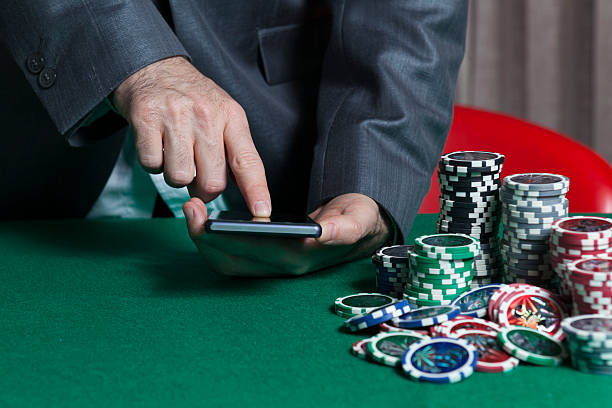
For instance, in roulette, the probability of a ball landing on a specific number is 1 in 37 or 1 in 38, depending on whether it’s a European or American wheel. Similarly, blackjack involves probabilities related to drawing cards that will either improve your hand or cause it to bust. By grasping these fundamental concepts, players can move beyond mere chance and begin to employ strategies that leverage their understanding of the game’s mathematical structure, aiming to minimize losses and maximize potential wins within the inherent limitations.
Strategic Approaches to Probability in Gaming
While casino games inherently favor the house, strategic approaches can significantly influence a player’s experience. This doesn’t mean eliminating the house edge entirely, but rather making decisions that are statistically sound. In games like blackjack, for example, employing basic strategy charts, which are derived from extensive probability calculations, can drastically reduce the house advantage. These charts dictate the optimal play for every possible hand combination against the dealer’s upcard.
Beyond card games, even simpler games involve probabilities that can be analyzed. Understanding payout structures on slot machines, for example, can guide players towards games with higher theoretical return-to-player (RTP) percentages, which represent the average percentage of wagered money a slot machine is expected to pay back over time. While individual session outcomes are still subject to variance, a higher RTP indicates a more favorable environment for the player over extended play. This meticulous approach to probabilities transforms gaming from pure luck into a calculated endeavor.
The Role of Randomness and House Edge
The concept of randomness is central to all casino games. Random Number Generators (RNGs) are employed in most modern casino games, particularly electronic ones, to ensure that each outcome is independent of previous ones. This inherent randomness is what makes games unpredictable in the short term, creating excitement and the thrill of the unknown. However, over vast numbers of plays, this randomness interacts with the pre-determined house edge.
The house edge is not a direct manipulation of game outcomes but a built-in mathematical advantage that ensures the casino’s profitability. It is expressed as a percentage of the total amount wagered that the casino expects to keep. For example, a game with a 5% house edge means that, on average, for every $100 wagered, the casino will retain $5. Understanding this edge helps players set realistic expectations and manage their bankrolls more effectively, recognizing that consistent winning in the long term is statistically improbable without a significant shift in probabilities or a highly skilled advantage play.
Advantage Play and Probability Manipulation
While most casino patrons play for entertainment, a small segment of players engages in “advantage play,” which involves using skill and understanding of probabilities to gain an edge over the casino. This can range from sophisticated card counting in blackjack to exploiting inefficiencies in certain betting systems. These methods are not about cheating but about leveraging the mathematical intricacies of the games and deviating from standard play when the probabilities momentarily shift in the player’s favor.
However, advantage play is challenging and often requires significant dedication, skill, and a deep understanding of probability and statistics. Casinos are also well-equipped to detect and counter such strategies, often barring players suspected of engaging in them. For the vast majority of players, the focus remains on enjoying the gaming experience while being mindful of the probabilities and the inherent house advantage, rather than attempting to overcome them through complex advantage play techniques.

Plain Dealer FCU: Financial Probabilities and Your Goals
While the thrill of casino probabilities is exciting, managing your personal finances involves a different kind of probability – the probability of achieving your financial goals. At Plain Dealer Federal Credit Union, we understand that responsible financial management is key to success. We offer a range of services designed to help you navigate your financial future with confidence, much like a seasoned player understanding the odds.
Whether you’re looking to save for a major purchase, plan for retirement, or simply manage your day-to-day expenses, Plain Dealer FCU provides the tools and support you need. Our loan products, savings accounts, and financial calculators are designed to empower you to make informed decisions, minimizing financial risks and maximizing your potential for growth. We believe in providing accessible and beneficial financial solutions, helping you achieve your financial objectives with personalized service and competitive rates, turning your financial aspirations into predictable realities.